✨ New Arrivals Just Dropped!Explore

1 / 22
+17
Catface Trousers 10.2oz
During the product development of the Cat Face Pullover Shirt we released in Spring 2026, there was one item I absolutely wanted to create: M40 denim jacket, adopted by the US Army in 1940.
In the 1930s, highly decorative coveralls already existed in the civilian market. Compared to those, the M40 is the complete opposite in every sense. The decorative details are stripped away, making it simpler and more practical.
Unlike the somewhat large and rough pockets seen on the M-35, this one is designed with more practicality in mind, retaining only the necessary functions. It truly feels like military supplied clothing. Until now, I haven't been drawn to so-called WW2 chore coats with two-pockets, but this US Army one is different.
It's somehow rugged, somehow rational. I was drawn to the "reasonable roughness" unique to military surplus.
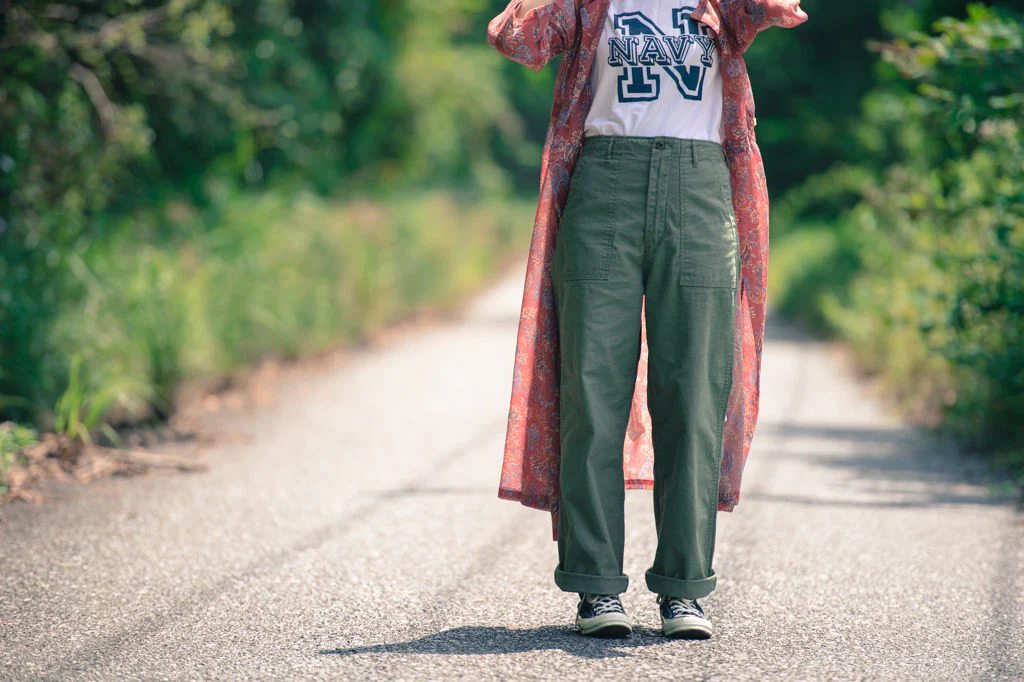
Similar to the Seamen series, we wanted these to be worn as a denim tux, and we also made the matching pants of which the base design is the US ARMY M-35 denim trousers adopted in the late 1930s.
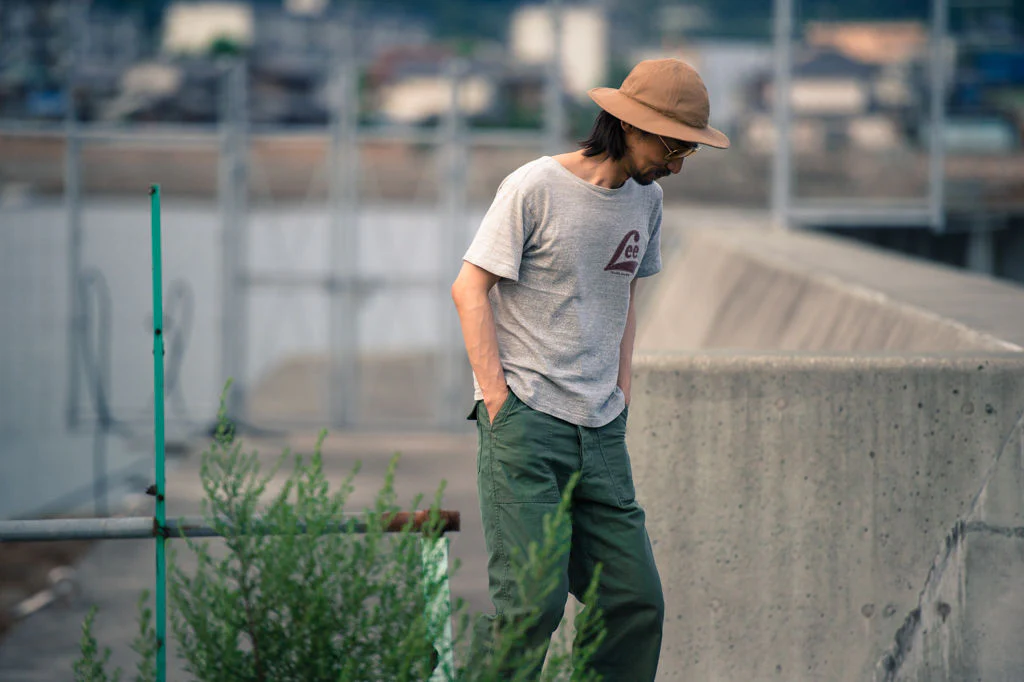
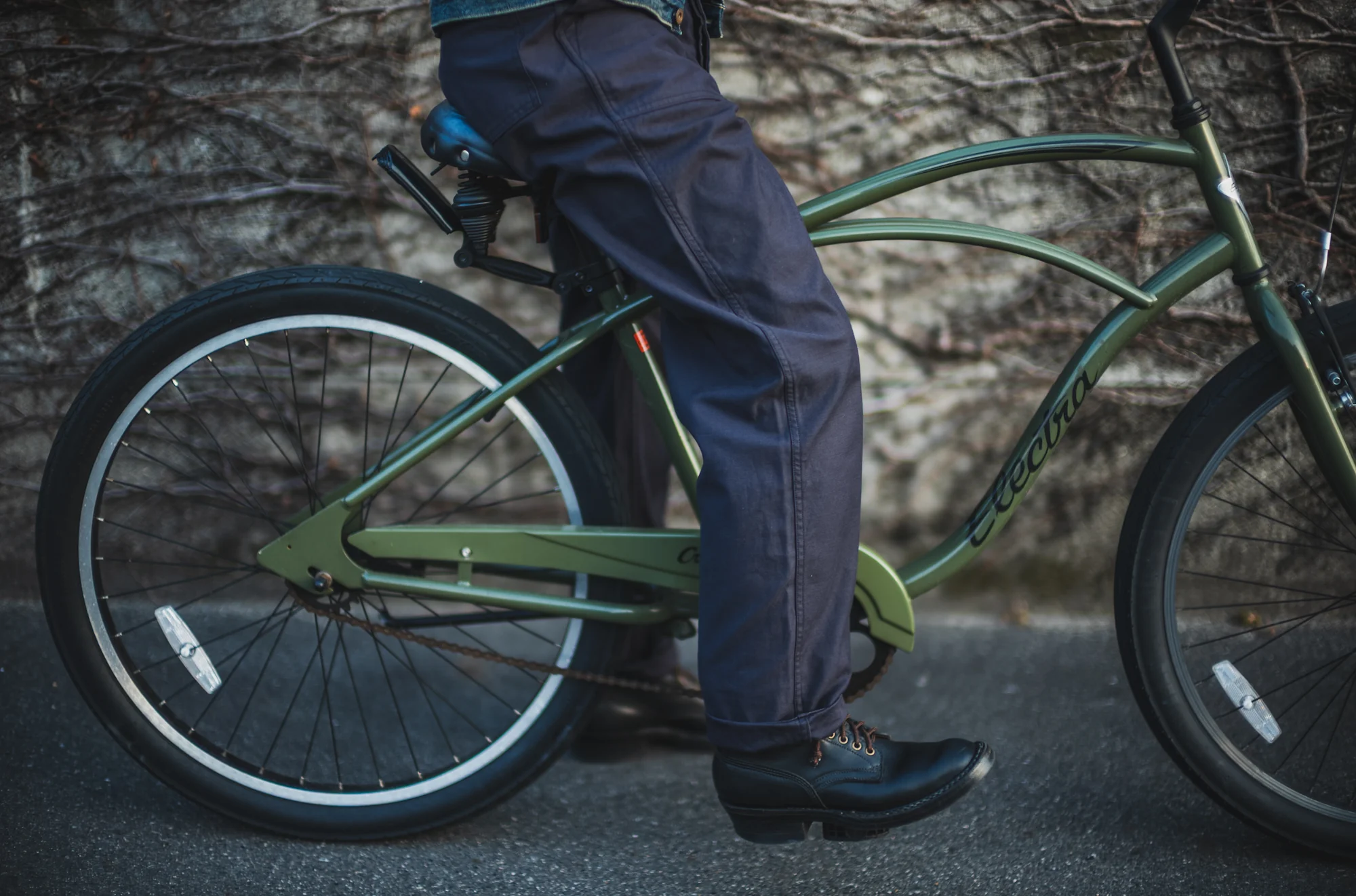
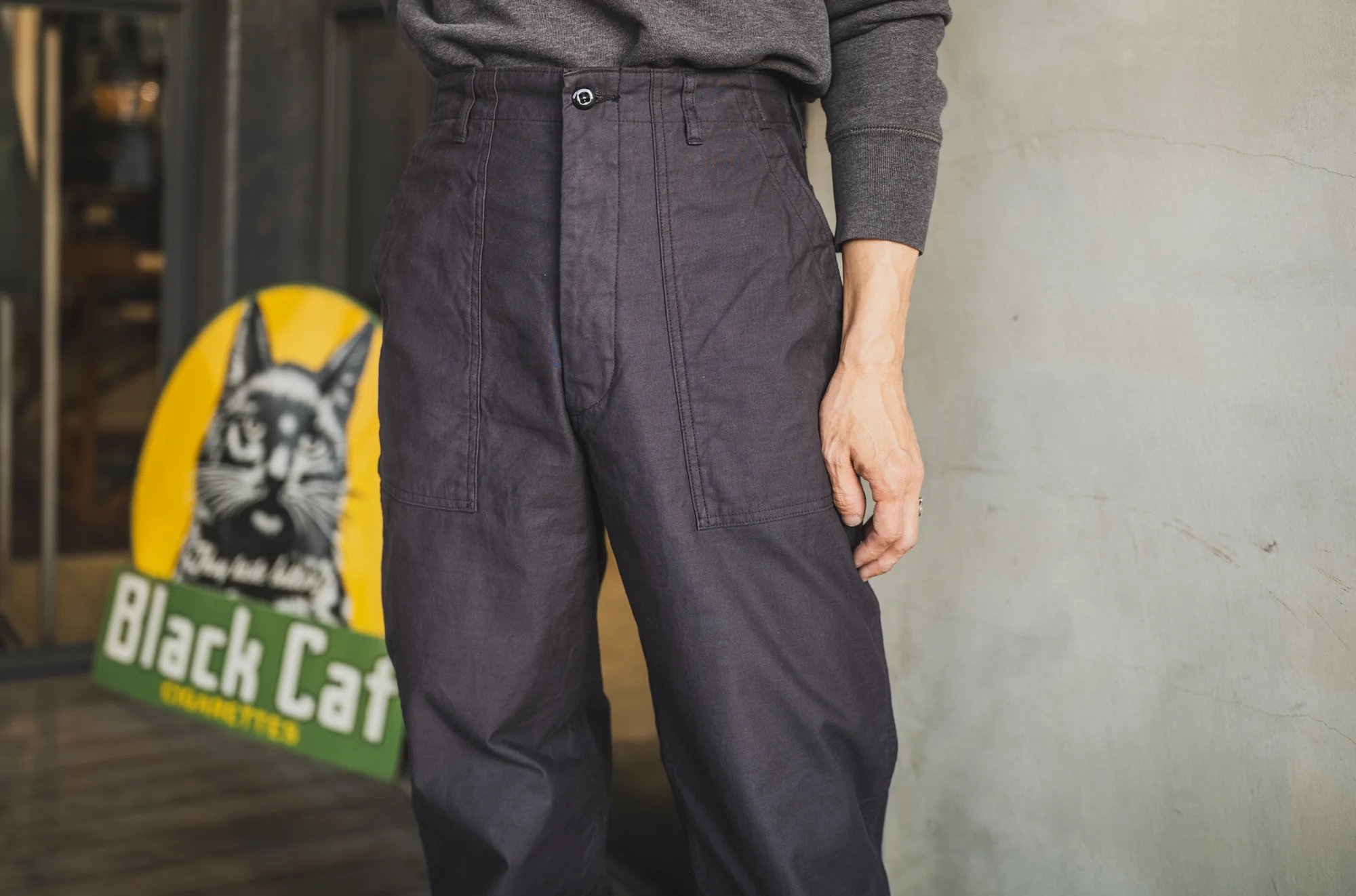
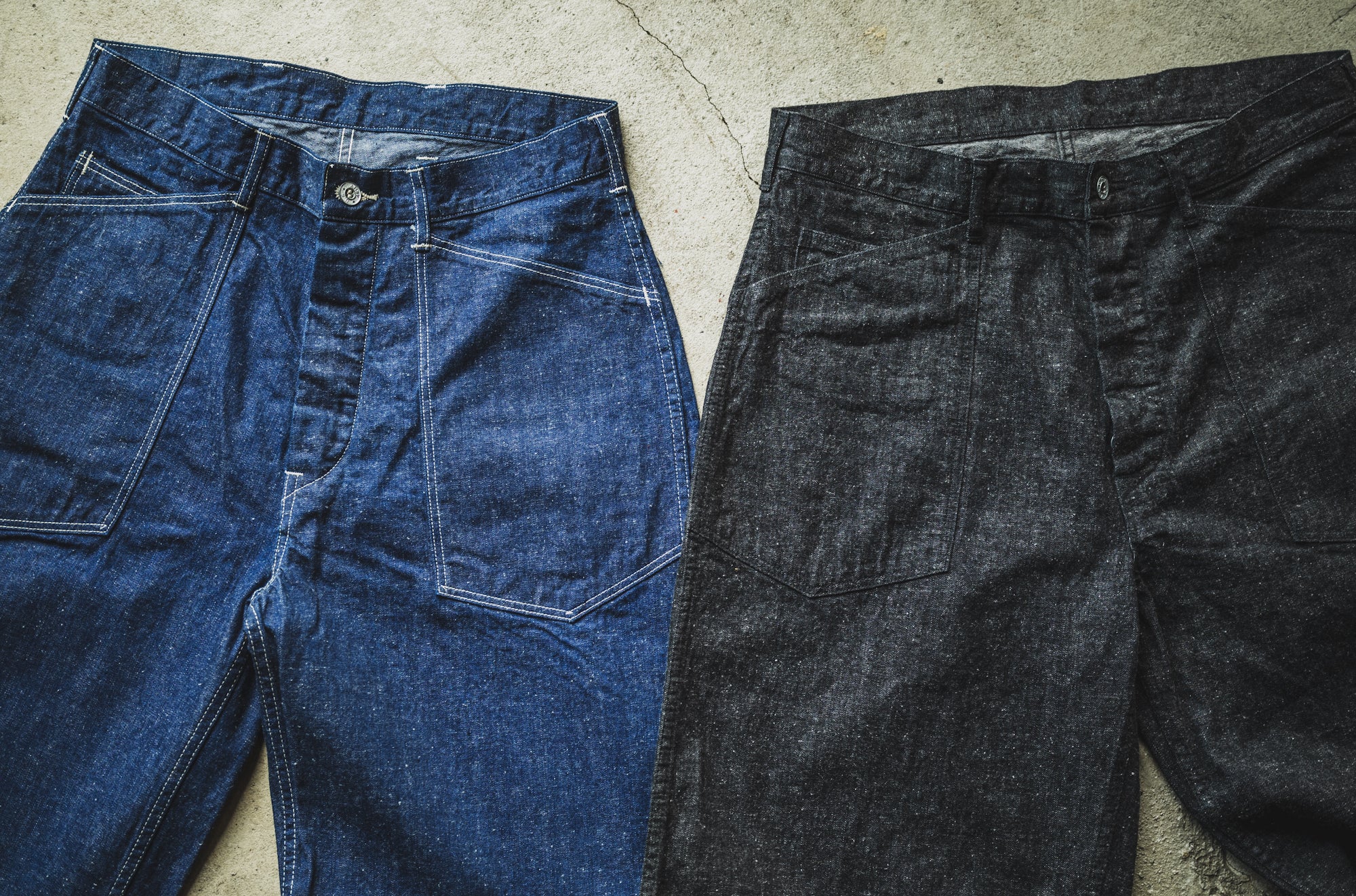
They feature a wide, relaxed silhouette and a high rise. The design, which prioritized workability, feels surprisingly fresh from a modern perspective, and it's a model that balances fashion and practicality very well.
To reproduce the roughness and slubby texture seen on the vintage US ARMY fabric, TCB tried an approach of using recycled cotton for both the warp and weft threads. While recycled cotton is often discussed in the context of environmental considerations, it inevitably results in a rougher yarn. For brands that want a clean & neat look, it can be considered a difficult material to work with in a sense. However, for TCB, that unavoidable unevenness was ideal.
The cotton that was once made into yarn is now made into yarn again. The unevenness created by the manufacturing process ultimately strongly evokes the atmosphere of that era. Furthermore, the weft threads use vat-dyed gray yarn. While the indigo dye develops a vibrant blue, the color appears somewhat deep and muted, which is said to be why indigo was often used for the workwear at the time to conceal stains & dirts. Although the fabric has undergone sanforization, the amount of water used has been intentionally kept to a minimum.As a result, the fabric still holds some raw feel, and it looks bumpy & rough on a surface. Moreover, because anti-twist treatment has been applied, natural twisting will occur as you wear it. It's not a uniform, perfectly finished denim but it's somewhat rough, somewhat imperfect. But that imperfection is a necessity brought by the constraints of the time, and that's precisely why I feel it still looks so appealing today.
In the 1930s, highly decorative coveralls already existed in the civilian market. Compared to those, the M40 is the complete opposite in every sense. The decorative details are stripped away, making it simpler and more practical.
Unlike the somewhat large and rough pockets seen on the M-35, this one is designed with more practicality in mind, retaining only the necessary functions. It truly feels like military supplied clothing. Until now, I haven't been drawn to so-called WW2 chore coats with two-pockets, but this US Army one is different.
It's somehow rugged, somehow rational. I was drawn to the "reasonable roughness" unique to military surplus.
Similar to the Seamen series, we wanted these to be worn as a denim tux, and we also made the matching pants of which the base design is the US ARMY M-35 denim trousers adopted in the late 1930s.
They feature a wide, relaxed silhouette and a high rise. The design, which prioritized workability, feels surprisingly fresh from a modern perspective, and it's a model that balances fashion and practicality very well.
To reproduce the roughness and slubby texture seen on the vintage US ARMY fabric, TCB tried an approach of using recycled cotton for both the warp and weft threads. While recycled cotton is often discussed in the context of environmental considerations, it inevitably results in a rougher yarn. For brands that want a clean & neat look, it can be considered a difficult material to work with in a sense. However, for TCB, that unavoidable unevenness was ideal.
The cotton that was once made into yarn is now made into yarn again. The unevenness created by the manufacturing process ultimately strongly evokes the atmosphere of that era. Furthermore, the weft threads use vat-dyed gray yarn. While the indigo dye develops a vibrant blue, the color appears somewhat deep and muted, which is said to be why indigo was often used for the workwear at the time to conceal stains & dirts. Although the fabric has undergone sanforization, the amount of water used has been intentionally kept to a minimum.As a result, the fabric still holds some raw feel, and it looks bumpy & rough on a surface. Moreover, because anti-twist treatment has been applied, natural twisting will occur as you wear it. It's not a uniform, perfectly finished denim but it's somewhat rough, somewhat imperfect. But that imperfection is a necessity brought by the constraints of the time, and that's precisely why I feel it still looks so appealing today.
During the product development of the Cat Face Pullover Shirt we released in Spring 2026, there was one item I absolutely wanted to create: M40 denim jacket, adopted by the US Army in 1940.
In the 1930s, highly decorative coveralls already existed in the civilian market. Compared to those, the M40 is the complete opposite in every sense. The decorative details are stripped away, making it simpler and more practical.
Unlike the somewhat large and rough pockets seen on the M-35, this one is designed with more practicality in mind, retaining only the necessary functions. It truly feels like military supplied clothing. Until now, I haven't been drawn to so-called WW2 chore coats with two-pockets, but this US Army one is different.
It's somehow rugged, somehow rational. I was drawn to the "reasonable roughness" unique to military surplus.
Similar to the Seamen series, we wanted these to be worn as a denim tux, and we also made the matching pants of which the base design is the US ARMY M-35 denim trousers adopted in the late 1930s.
They feature a wide, relaxed silhouette and a high rise. The design, which prioritized workability, feels surprisingly fresh from a modern perspective, and it's a model that balances fashion and practicality very well.
To reproduce the roughness and slubby texture seen on the vintage US ARMY fabric, TCB tried an approach of using recycled cotton for both the warp and weft threads. While recycled cotton is often discussed in the context of environmental considerations, it inevitably results in a rougher yarn. For brands that want a clean & neat look, it can be considered a difficult material to work with in a sense. However, for TCB, that unavoidable unevenness was ideal.
The cotton that was once made into yarn is now made into yarn again. The unevenness created by the manufacturing process ultimately strongly evokes the atmosphere of that era. Furthermore, the weft threads use vat-dyed gray yarn. While the indigo dye develops a vibrant blue, the color appears somewhat deep and muted, which is said to be why indigo was often used for the workwear at the time to conceal stains & dirts. Although the fabric has undergone sanforization, the amount of water used has been intentionally kept to a minimum.As a result, the fabric still holds some raw feel, and it looks bumpy & rough on a surface. Moreover, because anti-twist treatment has been applied, natural twisting will occur as you wear it. It's not a uniform, perfectly finished denim but it's somewhat rough, somewhat imperfect. But that imperfection is a necessity brought by the constraints of the time, and that's precisely why I feel it still looks so appealing today.
In the 1930s, highly decorative coveralls already existed in the civilian market. Compared to those, the M40 is the complete opposite in every sense. The decorative details are stripped away, making it simpler and more practical.
Unlike the somewhat large and rough pockets seen on the M-35, this one is designed with more practicality in mind, retaining only the necessary functions. It truly feels like military supplied clothing. Until now, I haven't been drawn to so-called WW2 chore coats with two-pockets, but this US Army one is different.
It's somehow rugged, somehow rational. I was drawn to the "reasonable roughness" unique to military surplus.
Similar to the Seamen series, we wanted these to be worn as a denim tux, and we also made the matching pants of which the base design is the US ARMY M-35 denim trousers adopted in the late 1930s.
They feature a wide, relaxed silhouette and a high rise. The design, which prioritized workability, feels surprisingly fresh from a modern perspective, and it's a model that balances fashion and practicality very well.
To reproduce the roughness and slubby texture seen on the vintage US ARMY fabric, TCB tried an approach of using recycled cotton for both the warp and weft threads. While recycled cotton is often discussed in the context of environmental considerations, it inevitably results in a rougher yarn. For brands that want a clean & neat look, it can be considered a difficult material to work with in a sense. However, for TCB, that unavoidable unevenness was ideal.
The cotton that was once made into yarn is now made into yarn again. The unevenness created by the manufacturing process ultimately strongly evokes the atmosphere of that era. Furthermore, the weft threads use vat-dyed gray yarn. While the indigo dye develops a vibrant blue, the color appears somewhat deep and muted, which is said to be why indigo was often used for the workwear at the time to conceal stains & dirts. Although the fabric has undergone sanforization, the amount of water used has been intentionally kept to a minimum.As a result, the fabric still holds some raw feel, and it looks bumpy & rough on a surface. Moreover, because anti-twist treatment has been applied, natural twisting will occur as you wear it. It's not a uniform, perfectly finished denim but it's somewhat rough, somewhat imperfect. But that imperfection is a necessity brought by the constraints of the time, and that's precisely why I feel it still looks so appealing today.
Select 色
Select サイズ
From $1.37
Catface Trousers 10.2oz—
$1.37
Description
During the product development of the Cat Face Pullover Shirt we released in Spring 2026, there was one item I absolutely wanted to create: M40 denim jacket, adopted by the US Army in 1940.
In the 1930s, highly decorative coveralls already existed in the civilian market. Compared to those, the M40 is the complete opposite in every sense. The decorative details are stripped away, making it simpler and more practical.
Unlike the somewhat large and rough pockets seen on the M-35, this one is designed with more practicality in mind, retaining only the necessary functions. It truly feels like military supplied clothing. Until now, I haven't been drawn to so-called WW2 chore coats with two-pockets, but this US Army one is different.
It's somehow rugged, somehow rational. I was drawn to the "reasonable roughness" unique to military surplus.
Similar to the Seamen series, we wanted these to be worn as a denim tux, and we also made the matching pants of which the base design is the US ARMY M-35 denim trousers adopted in the late 1930s.
They feature a wide, relaxed silhouette and a high rise. The design, which prioritized workability, feels surprisingly fresh from a modern perspective, and it's a model that balances fashion and practicality very well.
To reproduce the roughness and slubby texture seen on the vintage US ARMY fabric, TCB tried an approach of using recycled cotton for both the warp and weft threads. While recycled cotton is often discussed in the context of environmental considerations, it inevitably results in a rougher yarn. For brands that want a clean & neat look, it can be considered a difficult material to work with in a sense. However, for TCB, that unavoidable unevenness was ideal.
The cotton that was once made into yarn is now made into yarn again. The unevenness created by the manufacturing process ultimately strongly evokes the atmosphere of that era. Furthermore, the weft threads use vat-dyed gray yarn. While the indigo dye develops a vibrant blue, the color appears somewhat deep and muted, which is said to be why indigo was often used for the workwear at the time to conceal stains & dirts. Although the fabric has undergone sanforization, the amount of water used has been intentionally kept to a minimum.As a result, the fabric still holds some raw feel, and it looks bumpy & rough on a surface. Moreover, because anti-twist treatment has been applied, natural twisting will occur as you wear it. It's not a uniform, perfectly finished denim but it's somewhat rough, somewhat imperfect. But that imperfection is a necessity brought by the constraints of the time, and that's precisely why I feel it still looks so appealing today.
In the 1930s, highly decorative coveralls already existed in the civilian market. Compared to those, the M40 is the complete opposite in every sense. The decorative details are stripped away, making it simpler and more practical.
Unlike the somewhat large and rough pockets seen on the M-35, this one is designed with more practicality in mind, retaining only the necessary functions. It truly feels like military supplied clothing. Until now, I haven't been drawn to so-called WW2 chore coats with two-pockets, but this US Army one is different.
It's somehow rugged, somehow rational. I was drawn to the "reasonable roughness" unique to military surplus.
Similar to the Seamen series, we wanted these to be worn as a denim tux, and we also made the matching pants of which the base design is the US ARMY M-35 denim trousers adopted in the late 1930s.
They feature a wide, relaxed silhouette and a high rise. The design, which prioritized workability, feels surprisingly fresh from a modern perspective, and it's a model that balances fashion and practicality very well.
To reproduce the roughness and slubby texture seen on the vintage US ARMY fabric, TCB tried an approach of using recycled cotton for both the warp and weft threads. While recycled cotton is often discussed in the context of environmental considerations, it inevitably results in a rougher yarn. For brands that want a clean & neat look, it can be considered a difficult material to work with in a sense. However, for TCB, that unavoidable unevenness was ideal.
The cotton that was once made into yarn is now made into yarn again. The unevenness created by the manufacturing process ultimately strongly evokes the atmosphere of that era. Furthermore, the weft threads use vat-dyed gray yarn. While the indigo dye develops a vibrant blue, the color appears somewhat deep and muted, which is said to be why indigo was often used for the workwear at the time to conceal stains & dirts. Although the fabric has undergone sanforization, the amount of water used has been intentionally kept to a minimum.As a result, the fabric still holds some raw feel, and it looks bumpy & rough on a surface. Moreover, because anti-twist treatment has been applied, natural twisting will occur as you wear it. It's not a uniform, perfectly finished denim but it's somewhat rough, somewhat imperfect. But that imperfection is a necessity brought by the constraints of the time, and that's precisely why I feel it still looks so appealing today.